
The typical investing debate highlights that buying offers capital appreciation and tax advantages, while renting might be cheaper, freeing up extra cash to invest in the stock market. Both perspectives carry valid points. However, for most families, deciding to buy a home is just as emotional as it is financial, and renting does not always provide the absolute convenience we might expect. There are key benefits and drawbacks to each path that warrant careful thought.
Take a Step Back, Evaluate
Before you decide which option is best, you must answer one fundamental question: “Can I afford to buy a home?”. Answering this requires a thorough evaluation of your current financial standing.
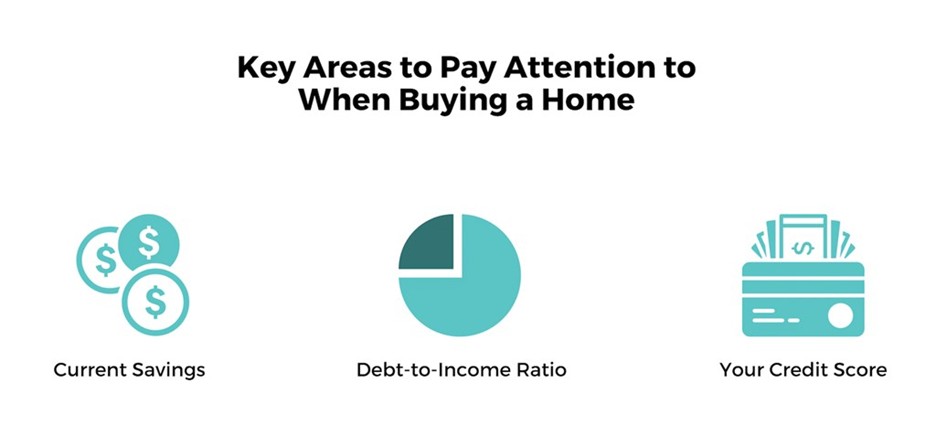
Current Savings
Establishing your savings is the first step, ensuring you have the basics covered before taking on mortgage debt. This means building an emergency fund, which is designed to protect you if you lose your income stream, not just to cover unexpected expenses. Having three to six months of living expenses prevents you from being forced to rely on credit cards, take out loans, or prematurely sell investments.
When it comes to the down payment, securing a mortgage with as little as 3.5% (or sometimes 0%) down is possible, but this requires paying private mortgage insurance (PMI). Bringing a standard 20% down payment to the table allows you to avoid the monthly PMI cost and reduces the total interest paid over the life of your mortgage.
Your Credit Score
A better credit score translates to a lower interest rate, which minimizes the total interest you will pay. For example, a 1% interest rate difference—such as 3% versus 4%—on a 30-year, $500,000 mortgage equals more than $100,000 in savings. Delaying a home purchase to improve your credit score and overall financial situation can ultimately save you tens of thousands of dollars.
Debt-to-Income Ratio
Your debt-to-income (DTI) ratio represents the percentage of your monthly income dedicated to paying down debt. Lenders use this metric to evaluate your reliability as a borrower. For instance, if credit card and car loan payments consume 30% of your monthly income, your DTI ratio is 30%. Generally, lenders prefer to see a DTI ratio between 25% and 35% when you are applying for a mortgage.
For our business-minded entrepreneur clients, the approach to homeownership might look different. Securing a mortgage can be challenging if you are starting a business without a partner who earns consistent W-2 income. Lenders typically require two years of strong financial records if you are self-employed with 1099 income. Furthermore, you might prefer to keep cash liquid to reinvest in your business rather than tying it up in a down payment.
Your Life, Your Choices
Beyond the balance sheet, you must factor in your personal preferences and lifestyle. Do you value the flexibility and convenience that renting provides? Or do you worry that buying a home will make you feel stuck in a single location? Identifying the “why” behind your desires is one of the most effective ways to make a clear decision. Finances are merely one element of this major lifestyle choice.
When Does Home Ownership Make the Most Sense?
- You plan to stay in one place: Financially, it usually makes sense to buy if you plan to live in the home for more than five years. Moving sooner can be costly, as you will not have built sufficient equity, and your closing costs will not have amortized over a longer period.
- You need the tax benefits of homeownership: Buying a home introduces several deductible expenses. Married couples filing jointly can deduct the mortgage interest on up to $750,000 of debt for a primary residence. You are also permitted to deduct up to $40,000 in state and local property taxes. Depending on your income, PMI might also be deductible. For self-employed individuals, a percentage of mortgage interest, real estate taxes, repairs, and utilities can be deducted based on the space your home office occupies.
The Takeaway
There is no one-size-fits-all answer to this housing question. While running the numbers can show you which option is most cost-effective, complex financial decisions require deep personal consideration. A financial advisor can help you explore the reasoning behind your desire to buy or rent, ensuring your final decision aligns with your core financial values.




October Market Commentary – The Fed Hikes as Treasury Yields Rise