If there is one aspect of personal finance that truly excites people, it is the prospect of retiring early. According to research from Hearts & Wallets, one in six Americans currently plans to retire before they turn 55, which is a full decade earlier than the traditional retirement age of 65. This widespread desire to leave the workforce early has grown so popular that it has earned its own moniker: the FIRE movement.
FIRE stands for “Financial Independence, Retire Early,” and the primary objective is to reach a point where you can step away from a full-time career and fund your life entirely without employment income. Typically, this is achieved by living frugally during your working years, meticulously planning your finances, and aggressively prioritizing savings and investments over standard life expenses. If the idea of achieving financial independence and leaving the daily grind sounds appealing, we have broken down how you can plan for this freedom and the exact actions required to make it a reality.
Understanding the FIRE Movement
While retiring early might sound like a pipe dream, with the right planning and determination, it could be closer than you think. First, however, you need to understand the different variations of early retirement, as each requires vastly different spending habits and lifestyle choices.
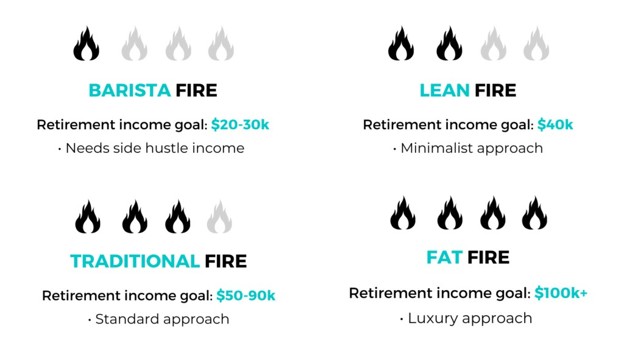
- Traditional FIRE: This is the most common approach. The goal is to accumulate enough invested wealth to maintain your current standard of living entirely through investment income, completely replacing the need for a job.
- Lean FIRE: This variation takes a much more modest and frugal approach to early retirement. It requires adhering to a bare-minimum budget both now and in retirement. This path generally suits those with a minimalist mindset, as the retirement income target for Lean FIRE is typically under $40,000.
- Fat FIRE: Taking the opposite approach, Fat FIRE caters to those who want a less frugal, more extravagant early retirement with an income range of $100,000 or more. Because this requires saving a significantly higher amount of money, it usually takes much longer to achieve, but it allows for a more luxurious lifestyle compared to the bare-necessities approach of Lean FIRE.
- Barista FIRE: As side hustles have gained popularity, this approach has become more common. The concept is to save and invest enough to quit your demanding full-time job, while transitioning to a lower-stress side hustle or part-time job that helps cover a portion of your ongoing monthly expenses.
Whether you wish to live lavishly or cut your expenses down to the bone, the ultimate goal of the FIRE movement is to live life on your own terms without relying on traditional employment income and that almost always requires strategic planning.
Planning to Retire Early
Much like standard retirement planning, your first step must be defining your goals and assessing your current financial picture to determine what actions need to be prioritized next. The most significant difference between planning for a traditional retirement and planning for FIRE is the compressed time horizon. To retire early, you must maximize your savings rates and investment contributions as quickly as possible so you have a large enough portfolio to draw income from.
Determining your exact savings target can be challenging. In 1994, William Bengen established the “4% rule”. This guideline suggests that if you have 25 times your annual expenses saved, you can safely withdraw 4% of that portfolio without running out of money for 30 years. For instance, if your goal is $75,000 in annual retirement income, you would need approximately $1.9 million saved and invested. That $1.9 million is referred to as your “financial independence number”.
However, you may need to modify the 4% rule for your unique situation. Variables like a retirement horizon longer than 30 years, rising medical costs, variable spending, life expectancy, and inflation can all necessitate adjustments to that calculation. It is imperative to craft a plan that makes the most sense for your specific circumstances.
Beyond the math, one of the greatest benefits of planning for FIRE is that it forces you to deeply consider the life you truly want to live. We often fail to dream big, but this exercise creates the opportunity to identify the specific experiences and goals you want to accomplish. Ultimately, retiring early boils down to answering two key questions:
- “How much income do I want in early retirement?”
- “How soon do I want to retire?”
Once you define that dollar amount and timeline, you can work backward to calculate the exact savings rates and actions required to reach your financial independence number.
How to Make It a Reality
While your current income dictates what expenses are feasible, keeping your spending as low as possible while maintaining a quality lifestyle is typically what makes FIRE possible. Using the financial independence number from your planning phase, you can calculate precisely how much you must save monthly and annually to hit your goal.
However, saving money will only get you so far. Investing is the most crucial piece of the FIRE puzzle because it puts your money to work for you. Depending on your situation, it is usually recommended to contribute to your 401(k) at least up to your employer’s match so you do not leave free money on the table. To hit aggressive target savings goals, you may need to contribute even more to lower your taxable income and maximize your savings rate.
But be careful: the purpose of a 401(k) or traditional IRA is to provide standard retirement income, not early retirement income. These accounts penalize you for withdrawing funds before age 59 ½. If you plan to retire before that age, it is absolutely essential that you also save in a taxable brokerage account or utilize Roth accounts.
Furthermore, eliminating high-interest debt is key to keeping early retirement expenses low. You need as much money as possible working for you, rather than working against you in the form of debt. Finally, working a side hustle during your accumulation years can help supercharge your savings and may serve as a reliable fallback income source once you step off the corporate ladder.
The Takeaway
Being financially independent and having the ability to retire early is a dream for many people, but even if you have no desire to leave the workforce early, everyone can benefit from the fundamentals of the FIRE movement. Planning out your future, being intentional with your spending, and investing diligently are essential habits whether you want to retire early or at the standard age. A financial advisor can help you work through the numbers and build a comprehensive plan to make your dream life a reality.




October Market Commentary – The Fed Hikes as Treasury Yields Rise