
Early retirement, whether planned or unplanned, brings about significant lifestyle changes when you stop working. Along with losing your primary source of income, stepping away early could also mean losing your employer-sponsored healthcare insurance, which can create a substantial expense you might not be prepared to cover. How can you bridge this critical healthcare gap? We outline the various options available for the period between early retirement and Medicare enrollment at age 65.
While most workers expect to reach full retirement at age 66, Gallup indicates that the average retirement age for all workers is actually 62. Furthermore, a 2024 study by the Employee Benefit Research Institute (EBRI) found that 49% of retirees exited the workforce earlier than they had initially planned. Key concepts we will cover to help navigate this transition include: COBRA, Health Savings Accounts (HSAs), the Affordable Care Act (ACA), and Private Insurance.
Accessing Healthcare
Unless you are in the small minority whose employer offers healthcare insurance as a continuing retirement benefit, or your spouse is still employed and can simply add you to their health plan, you will need to secure coverage until Medicare kicks in at age 65. This decision is largely driven by cost, the extent of coverage needed, and the length of the gap before you turn 65. If you find yourself in this situation, there are three primary ways to obtain coverage: accessing continuing coverage through COBRA, leveraging the Affordable Care Act (ACA), or purchasing private health insurance.
Consolidated Omnibus Budget Reconciliation Act (COBRA) Continuation of Benefits
If your former employer has more than 20 employees, you are eligible to avail yourself of COBRA continuation coverage. Under COBRA, you can continue to be covered under the exact same plan you had while employed, but you are responsible for paying the entire premium yourself, along with up to a 2% administration fee. This coverage is limited to 18 months; therefore, if you retire more than 18 months before becoming eligible for Medicare, you will eventually need to secure alternative coverage. While highly convenient, with keeping the familiar plan and benefits you are used to, COBRA can be quite expensive. The Kaiser Family Foundation estimated that the average annual premium for employer-sponsored family health insurance coverage was nearly $24,000 in 2023.
Covering the Cost of COBRA
If you currently have a health savings account (HSA), there is a specific rule regarding COBRA that works to your advantage. While standard insurance premiums are not generally considered qualified medical expenses for HSA purposes, the payment of premiums during a period of COBRA continuation coverage is explicitly allowed.
Health Savings Accounts – An Often-Overlooked Investment
If you are still in the workforce, it makes excellent sense to set up an HSA and begin contributing as soon as possible. HSAs were specifically created to be used alongside High Deductible Health Plans (HDHPs). For the 2024 tax year, the IRS defines an HDHP as any plan with a minimum deductible of $1,600 for an individual or $3,200 for a family. These accounts allow you to save and invest money specifically for medical expenses, which includes deductibles, co-insurance, prescriptions, vision care, and dental care.
Unlike Flexible Spending Accounts, unused HSA balances are carried over to the following year, the funds never expire, and they can even be passed on to a surviving beneficiary. Additionally, HSAs are uniquely “triple tax-advantaged”: they are funded with pre-tax dollars, the investments grow tax-free, and withdrawals remain completely untaxed provided they are spent on qualified medical expenses.
Affordable Care Act (ACA) – An Accessible Option
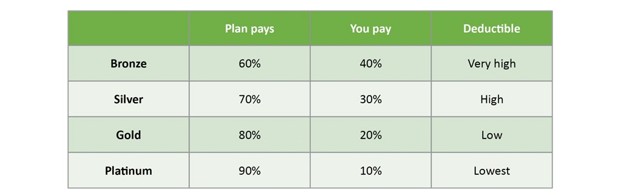
Another viable option, aside from COBRA or a spouse’s plan, is utilizing the Affordable Care Act (ACA). The ACA provides four distinct levels of plans, which correspond to the percentage split of healthcare costs between the insurance plan and the individual. These represent the out-of-pocket (OOP) costs you pay each time you actually use medical care, separate from your monthly premium costs. In addition to these OOP costs, the amount you must reach in OOP costs varies significantly among the plans.
Private Insurance – Customizable, But Can Be Pricey
If you choose not to utilize the ACA marketplace, private insurance remains available; however, depending on your specific situation, you may be required to sign up during the standard open enrollment period. Loss of employment is generally considered a qualifying life event, which would legally enable you to sign up for a plan outside of that standard open enrollment window, though individual plans have different requirements. Similar to navigating the ACA, selecting a private plan requires taking a thoughtful look at your anticipated medical needs and then parsing through the available options to find the best fit. It may be highly beneficial to use an insurance agent to help sort through the different plans—you can locate a qualified professional using the National Association for Health Underwriters “Find An Agent” tool.
The Bottom Line
Bridging the gap to Medicare requires careful evaluation of your health needs and financial resources. (Editor’s Note: The original manuscript erroneously concluded by referencing Student Loan Forgiveness and Income-Driven Repayment plans. This conclusion has been amended to reflect the text’s actual subject matter). By taking the time to parse your options early, you can enjoy the retirement you have built without the stress of navigating healthcare gaps blindly.




October Market Commentary – The Fed Hikes as Treasury Yields Rise