The geopolitical landscape remains complex as the conflict involving Iran continues without a clear resolution, leaving the current ceasefire on shaky ground. Despite this backdrop, equity markets have shown remarkable resilience, reaching new milestones fueled by an exceptionally strong earnings season.
However, the bond markets tell a more cautious story. Expectations for interest rate cuts have shifted dramatically due to a spike in inflation, leading to volatile and steeply rising yields. This disconnect highlights the current economic uncertainty: while consumer confidence appears low, actual spending remains high—even if it means families are dipping into their savings to keep up.
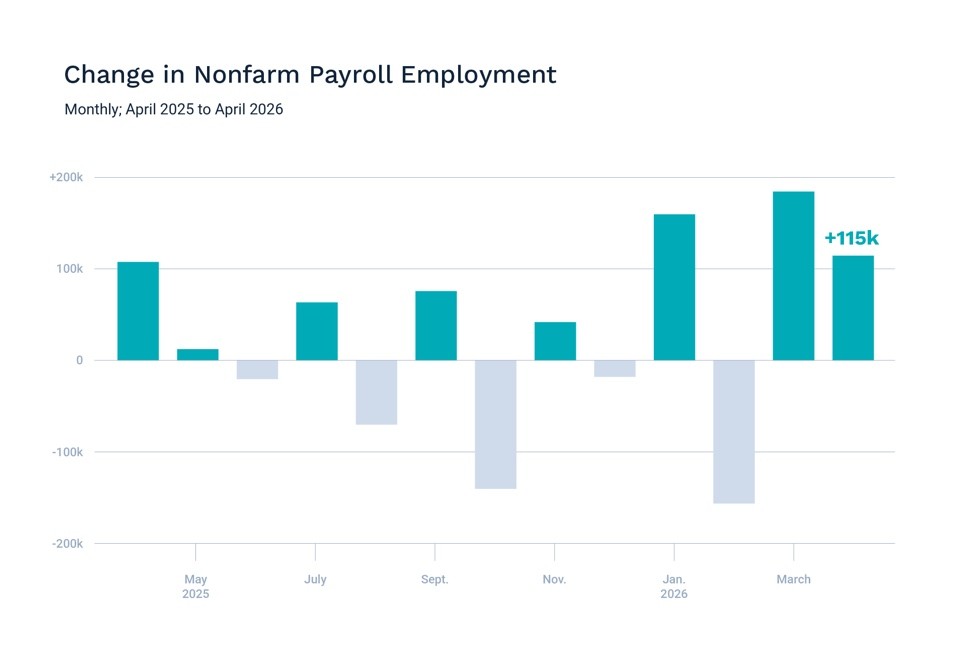
In the labor market, we are seeing signs of “stabilizing,” defined by two consecutive months of job growth. While rising fuel costs are pushing headline inflation higher, there is growing concern that these costs will soon impact other areas of the economy.
Central to all of this is the Federal Reserve. Chairman Powell’s term concludes on May 15, and his successor, Kevin Warsh, is expected to be confirmed by a narrow margin, reflecting a lack of bipartisan consensus.
Let’s Get Into the Data
The numbers reveal a complex picture for the U.S. economy:
- Employment Gains: Non-farm payrolls rose by 115,000 in April. This significantly outperformed the Dow Jones consensus estimate of 62,000 and marks two steady months of growth.
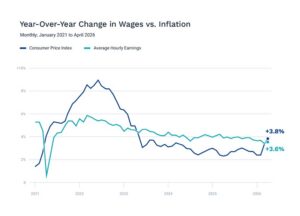
- Inflation Pressures: The Consumer Price Index (CPI) grew 3.8% over the last twelve months, the highest rate since 2023. While the month-over-month increase of 0.6% is a slight moderation from March’s 0.9%, the upward trend remains clear.
- Retail Resilience: Consumers haven’t stopped spending. Retail sales rose for the seventh month in a row, up 5.73% year-over-year.
- Economic Growth: GDP expectations are bouncing back, with the Atlanta Fed’s GDPNow estimating 3.7% growth for the second quarter.
What Does the Data Add Up To?
While spending and GDP growth look positive on the surface, the underlying mechanics are concerning for many households. Families are increasingly funding their lifestyles by tapping into savings; the personal savings rate dropped to 3.6% in March, the lowest level since 2022. For professionals in the medical and med-tech fields, these rising costs—particularly at the pump—are a reminder of how quickly inflation can erode purchasing power.
Furthermore, while the labor market is adding jobs, wage growth is failing to keep pace with the cost of living. Because of this persistent inflation, current forecasts suggest we may not see interest rates decrease until 2027.
The Federal Reserve is wary of repeating past mistakes where they underestimated post-COVID inflation. While some indicators, like core goods and import prices, aren’t yet “red-lining,” the energy sector remains a major risk. The ongoing tension at the Strait of Hormuz could further disrupt supply chains and keep prices elevated.
All eyes now turn to incoming Chairman Kevin Warsh. While interest rates are expected to hold steady at the June meeting, his first press conference will be vital in setting the tone for future policy and communication.
Charts of the Month: Labor Markets and Inflation vs. Wages
To better understand where we stand, let’s look at two key visuals.
The first chart illustrates that while the job market has been inconsistent over the last year, we have finally seen two back-to-back months of positive growth. This “stabilization” is a welcome sign of resilience in the broader economy.
The second chart highlights the primary challenge for most families: the gap between earnings and expenses. As you can see, the cost of living (CPI) has climbed to 3.8%, while average hourly earnings are trailing at 3.6%. When inflation outpaces wage growth, it creates a “hidden tax” on your hard-earned income.
Equity Markets in April
The stock market managed to shake off early-month jitters, with the S&P 500 gaining 10.49% in April.
- Tech Leads: The technology sector surged nearly 20%, dismissing concerns over “AI Armageddon”.
- Growth vs. Value: Investors favored growth stocks (up 12.4%) over value stocks (up 7.2%).
- Earnings Strength: Corporate America is performing well; 84% of S&P 500 companies beat earnings estimates, surpassing historical averages.
Bond Markets in April
In contrast to the optimism in equities, bond yields moved higher as prices fell. The 10-year U.S. Treasury yield rose to 4.39%, and the 30-year yield reached 4.98%. The Bloomberg U.S. Aggregate Bond Index saw a modest gain of 0.39%, while Municipal Bonds performed slightly better at 1.15%.
The Smart Investor
As we approach the summer, the economic forecast includes higher gas prices, persistent inflation, and interest rates that are likely staying “higher for longer”. For busy professionals balancing a demanding career with a family, two strategies are essential right now: cash flow planning and risk tolerance reviews.
Unlike a simple budget, cash flow planning is a strategic look at how your income is directed toward long-term goals, such as college savings for your children or debt reduction. Additionally, with the recent market run-up, it is easy to become over-exposed to certain sectors. Now is an excellent time to ensure your portfolio still aligns with your actual comfort level for risk.
Summer is fleeting. Taking a moment now to organize your finances will allow you to focus on what matters most—enjoying those “lazy, hazy days” with your family.
We are always here to help you navigate these economic shifts. Please reach out with any questions!
May Market Commentary – A New Fed Chairman Takes the Helm
May Market Commentary – A New Fed Chairman Takes the Helm
The geopolitical landscape remains complex as the conflict involving Iran continues without a clear resolution, leaving the current ceasefire on shaky ground. Despite this backdrop, equity markets have shown remarkable resilience, reaching new milestones fueled by an exceptionally strong earnings season.
However, the bond markets tell a more cautious story. Expectations for interest rate cuts have shifted dramatically due to a spike in inflation, leading to volatile and steeply rising yields. This disconnect highlights the current economic uncertainty: while consumer confidence appears low, actual spending remains high—even if it means families are dipping into their savings to keep up.
In the labor market, we are seeing signs of “stabilizing,” defined by two consecutive months of job growth. While rising fuel costs are pushing headline inflation higher, there is growing concern that these costs will soon impact other areas of the economy.
Central to all of this is the Federal Reserve. Chairman Powell’s term concludes on May 15, and his successor, Kevin Warsh, is expected to be confirmed by a narrow margin, reflecting a lack of bipartisan consensus.
Let’s Get Into the Data
The numbers reveal a complex picture for the U.S. economy:
What Does the Data Add Up To?
While spending and GDP growth look positive on the surface, the underlying mechanics are concerning for many households. Families are increasingly funding their lifestyles by tapping into savings; the personal savings rate dropped to 3.6% in March, the lowest level since 2022. For professionals in the medical and med-tech fields, these rising costs—particularly at the pump—are a reminder of how quickly inflation can erode purchasing power.
Furthermore, while the labor market is adding jobs, wage growth is failing to keep pace with the cost of living. Because of this persistent inflation, current forecasts suggest we may not see interest rates decrease until 2027.
The Federal Reserve is wary of repeating past mistakes where they underestimated post-COVID inflation. While some indicators, like core goods and import prices, aren’t yet “red-lining,” the energy sector remains a major risk. The ongoing tension at the Strait of Hormuz could further disrupt supply chains and keep prices elevated.
All eyes now turn to incoming Chairman Kevin Warsh. While interest rates are expected to hold steady at the June meeting, his first press conference will be vital in setting the tone for future policy and communication.
Charts of the Month: Labor Markets and Inflation vs. Wages
To better understand where we stand, let’s look at two key visuals.
The first chart illustrates that while the job market has been inconsistent over the last year, we have finally seen two back-to-back months of positive growth. This “stabilization” is a welcome sign of resilience in the broader economy.
The second chart highlights the primary challenge for most families: the gap between earnings and expenses. As you can see, the cost of living (CPI) has climbed to 3.8%, while average hourly earnings are trailing at 3.6%. When inflation outpaces wage growth, it creates a “hidden tax” on your hard-earned income.
Equity Markets in April
The stock market managed to shake off early-month jitters, with the S&P 500 gaining 10.49% in April.
Bond Markets in April
In contrast to the optimism in equities, bond yields moved higher as prices fell. The 10-year U.S. Treasury yield rose to 4.39%, and the 30-year yield reached 4.98%. The Bloomberg U.S. Aggregate Bond Index saw a modest gain of 0.39%, while Municipal Bonds performed slightly better at 1.15%.
The Smart Investor
As we approach the summer, the economic forecast includes higher gas prices, persistent inflation, and interest rates that are likely staying “higher for longer”. For busy professionals balancing a demanding career with a family, two strategies are essential right now: cash flow planning and risk tolerance reviews.
Unlike a simple budget, cash flow planning is a strategic look at how your income is directed toward long-term goals, such as college savings for your children or debt reduction. Additionally, with the recent market run-up, it is easy to become over-exposed to certain sectors. Now is an excellent time to ensure your portfolio still aligns with your actual comfort level for risk.
Summer is fleeting. Taking a moment now to organize your finances will allow you to focus on what matters most—enjoying those “lazy, hazy days” with your family.
We are always here to help you navigate these economic shifts. Please reach out with any questions!
RECENT ARTICLES
October Market Commentary – The Fed Hikes as Treasury Yields Rise
Medicare Open Enrollment Starts October 15: What You Can Change for 2027
September Market Commentary – Stocks Rebound, The Test Waits
Gift or Loan: Helping a Child With a Down Payment
The Diversification Rule That Resets With Every Vest